

From Acceptance to Advocacy: How One Recruiter is Championing Change and Building a Career She Loves
Category: Disability (Learning/Mental/Physical)

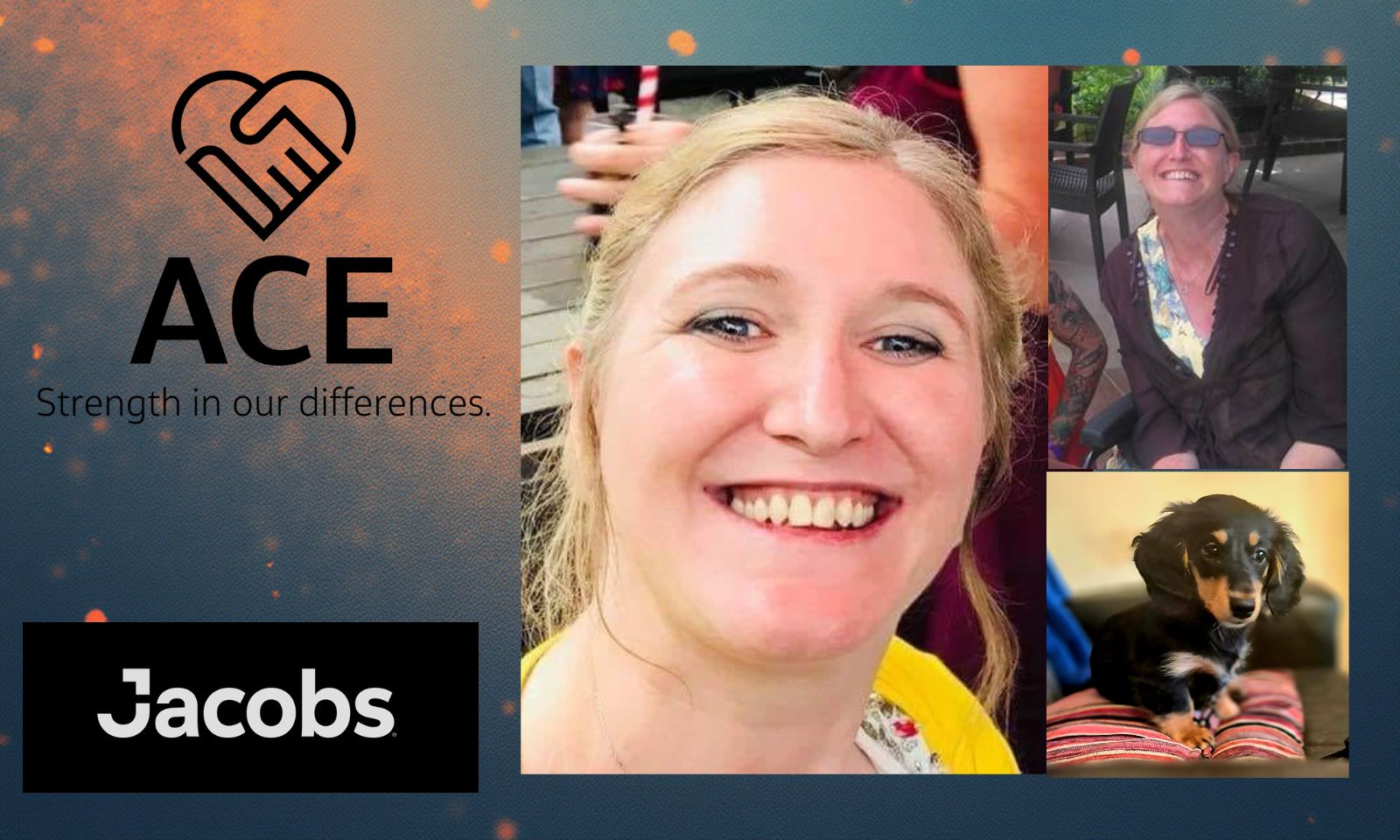
For Talent Acquisition Consultant, Steph Sharples, a diagnosis of Multiple Sclerosis fundamentally shifted her perspective on life and work. Her priority became finding a stable, supportive environment where she could continue to do the work she loves.
At Jacobs, she found just that. In this honest conversation, Steph shares her journey of acceptance, her passion for championing accessibility, and the role of employee-led groups like Access. Connect. Empower (ACE), Jacobs’ network for disability, neurodiversity and caregiving, in fostering an invaluable sense of community and support. Her story is a powerful testament to finding an employer that truly accepts you for who you are and trusts you to thrive.
Could you start by telling us a bit about your role at Jacobs? What are your key responsibilities and what does a typical day look like for you?
My role is to proactively source talented individuals. Rather than waiting for people to apply for open roles, I actively go out and find them, introducing them to the opportunities we have here at Jacobs.
If we're struggling to fill certain positions, teams will come to me for support. A big part of my job is to then find the right people, coach them through each step of the recruitment process, and really help them understand what makes Jacobs a great place to work. I’m proud to say it’s been a successful approach for me over the past five years.
What do you find most challenging and, conversely, most rewarding about your work?
The most rewarding part of my job is finding an opportunity for someone that truly fulfils their career goals. Having been in recruitment for over 20 years, I still revel in the fact that I'm genuinely helping people.
On the flip side, the biggest challenge can be the speed of the internal hiring process. When I send a CV to a hiring manager, I can't let it sit for two weeks; I need to get back to the candidate promptly. I pride myself on building strong relationships with hiring managers and helping them see things from a candidate’s perspective, which in turn leads to more timely decisions, and ultimately a better experience for everyone involved.
To help our readers understand your journey better, would you be comfortable sharing a little about your condition and when you were diagnosed?
I'm happy to share, because I want to encourage more disabled people to get out there and work. The opportunities exist; you just have to find the right company.
My journey began when I was diagnosed with rheumatoid arthritis at 26. After having both knees replaced, the procedure unfortunately didn't work. Further investigation with an MRI scan revealed the true diagnosis: I had Multiple Sclerosis (MS).
Since then, I've been living with secondary progressive MS, for which there is currently no treatment. The biggest part of my journey has been acceptance. At first, it's frustrating to realise there are things you can no longer do, but you have to learn to accept that this is what it is and just adapt.
We understand that the day-to-day experience of living with a physical disability can vary widely. What are some of the things you navigate in your daily life?
One of the biggest challenges is that the world fundamentally isn't built for people in wheelchairs. A perfect example happened just the other day; I went to the dentist and fell out of my wheelchair because the access ramp wasn't fit for purpose.
It really highlights the problem. People might put a solution in place, like a ramp, but it's often not designed by someone who actually uses a wheelchair. A big part of navigating daily life is having to make people aware of these issues. You might have a ramp, but that doesn't mean you have true accessibility.
Continuing to thrive in a full-time career is clearly important to you. What does continue to work and develop professionally mean to you on a personal level?
On a personal level, my perspective has definitely shifted. Twenty years ago, I might have been more focused on career development, but with life's stresses and frustrations, my priorities have changed.
Now, I'm just happy to be still working and to be doing something I genuinely love. For me, it’s become less about constantly striving for the next big thing and more about enjoying my life and the role I'm in right now.
Jacobs is recognised as a Disability Confident employer. From your personal experience, what does this commitment actually look like in practice?
In practice, it means I can fully engage with my team without the physical strain of having to be somewhere in person. But it's not a compromise, I'm still involved in top-level, senior meetings.
In that virtual environment, nobody knows that my body is broken, because they can't see me below my face. My disability doesn't have to be the focus. This creates a powerful choice: we don't have to talk about it if I don't want to, but I often do. I try to encourage the conversation to make people aware of the person I am, and to show what other people can achieve too.
Could you share some specific examples of accessibility adjustments, whether physical, technological, or procedural, that Jacobs has implemented to help you thrive in your role?
On a technological level, they've provided the core equipment I need, like my laptop and the full setup to work effectively online. This is fundamental.
Beyond my own setup, I’ve become a passionate champion for accessibility across the company, especially regarding our physical office spaces. We're actively looking into improvements and are consulting with membership organisations, not-for-profit groups and government bodies including Business Disability Forum, Disability:IN and the Department for Work and Pensions, to ensure we are not just compliant, but are truly making our environments easy to navigate. The goal is to remove any extra difficulty for people who already have a lot to manage.
As part of that advocacy, I also encourage the adoption of more assistive technologies. For instance, I champion making tools like voice control widely available for writing emails or communicating online, ensuring everyone has the options they need to do their best work.
Support often goes beyond formal adjustments. Does Jacobs have employee networks or resources, like the ACE (Access. Connect. Empower) employee network, that have been invaluable to you?
Absolutely. The ACE network is about being a community. It’s not just for physical disabilities; it’s a supportive space for people with ADHD, autism, and other conditions. It's a sounding board where you can connect with other caring people , participate in events, and just share when you’re having a tough day if you need to.
The real value is the human connection. Through an ACE call, I met a bridge engineer who also has MS. I keep in touch with him, and because I’ve already been through some of the things he’s experiencing, I can hopefully inspire him not to worry so much.
It comes down to passing on your experience. I’m past the hardest stages, and I want to be there for anyone I can who's struggling, because I know what they’re going through. That kind of support system is invaluable.
What are some of the current challenges you face at work that colleagues or leaders might not be aware of?
My managers are incredibly respectful and understanding. If I have an incident, they don't hesitate to tell me to take the time I need. The biggest ongoing challenge is simply the physical logistics of travel. For instance, getting into our Manchester office for a team dinner just isn't possible for me.
The key has been open communication and honesty. I'm direct with them about my limitations, and there's a mutual understanding. It really comes back to acceptance; recognising what I can't do anymore and being straightforward about it.
What are you most excited about for your future, both personally and professionally, at Jacobs?
Honestly, it’s the simple knowledge that I’m in a place where I can keep doing work that really matters. Having that sense of stability and the support I need means I can focus on my job and my life, and not spend my days watching Homes Under the Hammer!
Finally, what message would you give to another talented individual with a disability who is reading this and considering applying for a role at Jacobs?
I would say it's a very wise decision. The culture here is fantastic , and it's an incredibly supportive environment. If you're good at your job, you shouldn't let your disability control your career. Don't let it define your life; you've still got one to live.
Of all the employers I've worked for over the past 20 years, Jacobs has been the best. They accept me for who I am and what I'm capable of, and they trust me to do my thing.

VERCIDA works with over one hundred clients who are committed to creating an inclusive work environment. If you are an employer and interested in working with VERCIDA to promote your culture and inclusion initiatives and attract the best candidates, please email [email protected] for more information.
 Help us find the best workplace for you by sharing more about yourself.
We will never disclose your information with others.
Help us find the best workplace for you by sharing more about yourself.
We will never disclose your information with others.
Learn more about this employer
Jacobs
Inclusive features
- No matching inclusive features