

"It's made me want to do even more right now": David Smith on MS, ambition and flexibility at Sage
Category: Disability (Learning/Mental/Physical), Home & Flexible Working

Created by VERCIDA for Sage
David Smith is a Digital Delivery Manager, turning strategy into action at Sage within the Digital Planning & Enablement team, and one of the co-leads of Sage's UKI Ability Network.
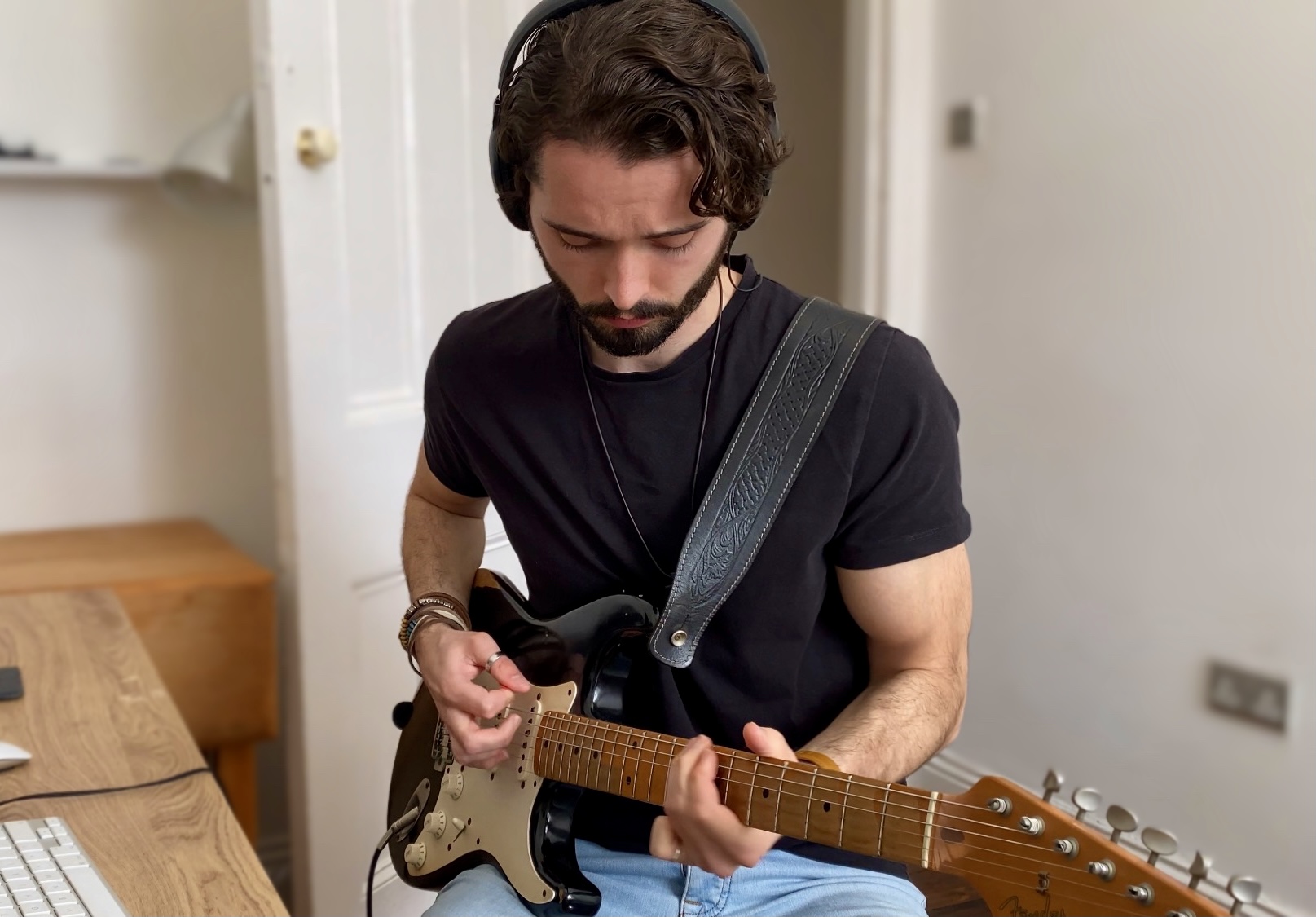
Before any of that there were numb fingers put down to guitar practice, a seizure at 22, a few hours spent believing he may have a brain tumour, and six years before anyone used the words multiple sclerosis.
It Started with Numb Fingers
Numb fingers aren’t uncommon for a regularly performing guitarist, so when David Smith felt pins and needles in his right hand in 2016, he thought nothing of it.
“I play guitar, so this wasn't abnormal to me,” he says. “Depending on how much I'm practising, I could have things like that happen. General wear and tear, numbness.”
Then it spread to his other fingers, then his right lip and cheek. His GP diagnosed carpal tunnel syndrome and a bout of Bell's palsy. Days after finishing the steroids he was prescribed, David had a seizure.
“It felt almost as if I'd been slapped in the face, and like water was trickling down, but only on one side. My right hand was spasming, and all the muscles on the right side of my face and down my neck were spasming as well.”
Unable to speak properly, and with the help of a friend, he was asked by the 999 operator to repeat a phrase, the ‘early bird gets the worm’, and “it just came out as a garbled mess”.
“I remember the look on my friend’s face when I said it. It was then that I thought – Oh, this might be serious. Am I having a stroke?”
Ten minutes later it stopped as abruptly as it had started. When the paramedics arrived on the scene, they didn’t have anything to diagnose. But when it happened again the next night, David went to A&E, where a doctor decided carpal tunnel and Bell's palsy coincidentally appearing at the same time did not add up, and referred him to neurology.
A CT scan found something on his brain, and the initial assessment was potentially a tumour.
“Obviously, I was shocked. Are we certain? I asked. They said, well, no, but it’s certainly a possibility.”
Fortunately, it was not. Anti-inflammatory medication brought the swelling down, which meant a lesion surrounded by inflammation, rather than a growth, though the cause was never established. Further MRIs over the next few years found more small lesions, but with no other symptoms, these were deemed as potential false positives.
“I was told that they may only be finding these ‘flecks’ on the scans, because of how regularly I was having MRIs. It’s possible that lots of people had these on their brains, but they weren’t being picked up.”
MS was possible, he was told, but unlikely. “So, I just put it behind me.”
A Name for It – The diagnosis
Six years later, by now at Sage, David felt numbness down the outside of his left arm. No seizure, no drama. Just a familiar feeling and a thought: I haven't had an MRI in a few years.
The scan found a new lesion on the right side of his brain, corresponding to his left arm. Multiple episodes of scarring, in multiple places at multiple times, is the diagnostic threshold, so it became official. – Multiple Sclerosis.
“The diagnosis was a shock, but it was something I'd been made aware of as a possibility.”

The Trade-Off Most People Don't See
David now receives ocrelizumab injections twice a year, to hopefully stop relapsing-remitting MS progressing to the secondary progressive form, where symptoms become constant rather than episodic. It appears to be working, but it comes with a cost.
“The myelin sheath around my nerves is being damaged by my own immune system. What Ocrevus does is target your B cells and weaken those, and that stops it damaging the myelin. So, it helps to stop the MS progression. However, in doing that, it means I'm now immunocompromised.”
Crowds are the risk now: airports, planes, concerts. “I used to go years without getting ill. Now most months I'll have a bout of feeling under the weather. It's never awful, but when I am ill I'm always aware it could progress to something like a chest infection.”
Fatigue arrives from both directions, the condition and the treatment. “Every now and then I get hit with a bout of tiredness where I sit down on the sofa and think, I don't want to get up from here. I used to think I'm just tired. It's only recently that I've thought, maybe that's what fatigue actually is.”
Telling Sage, and the Adjustment That Followed
David told his line manager, and at first that was as formal as it needed to get, because nothing needed to change. Once a week in the office suited him: low exposure, and fewer early commutes eating into his energy.
Then in 2025 Sage moved to three days a week in the office. “I thought, hang on, that's tripling my level of exposure a week. It was tripling travel.”
He raised it with his manager. “They said, let's take a look into the reasonable adjustments policy.” Forms followed, then a review by an occupational health professional external to Sage. Start to finish the process took about two weeks. Now David still comes in once a week, and the remote arrangement is reviewed with him roughly once a year. The office in which David works hot desks, so sanitising supplies are provided for his keyboard and mouse.
Was anything harder than it should have been?
“In terms of work, no, nothing's been harder than it should have.” The hard part was the diagnosis, and that was waiting lists rather than his employer.
What he singles out about his manager is what did not happen.
“My line manager isn't asking, do you really need that? Can we push back on that? They're happy to help me do my best work. And if part of that is having that reasonable adjustment made, then that's there to support me.”
UKI Ability Network
As co-lead of the UKI Ability Network at Sage, David gets asked what the network achieves. His answer is about escalation and amplification. “It's there to give a voice to those who maybe don't feel they have a loud enough voice, or the platform to raise it. Because it's a business. Why would they bring this up on a big business call, when everyone's talking about KPIs and OKRs? Well, that's what the network's there for.”
What gets raised goes upwards, to Sage's DEI Senior director and to the parts of the business that can act on it. “It does raise real concerns and solutions, which is the most important part.” The network also runs story shares, where Sage colleagues talk about their own experience of disability and different ablement.
“The UKI network had about a hundred members when I joined. Over the past couple of years though, we’ve seen our numbers triple. People are wanting to get involved, and it’s great!”
Disclosure, David is clear, is a personal choice, and choosing not to disclose is not evidence of a bad culture.
“When you have a visible disability, it’s almost impossible to hide it – even if you wanted to. But when it's invisible, you do have that choice. And for those who do want to talk about it, but don't feel comfortable, I'd encourage them to reach out to a network, or colleagues they trust.”
Ambition, Sharpened
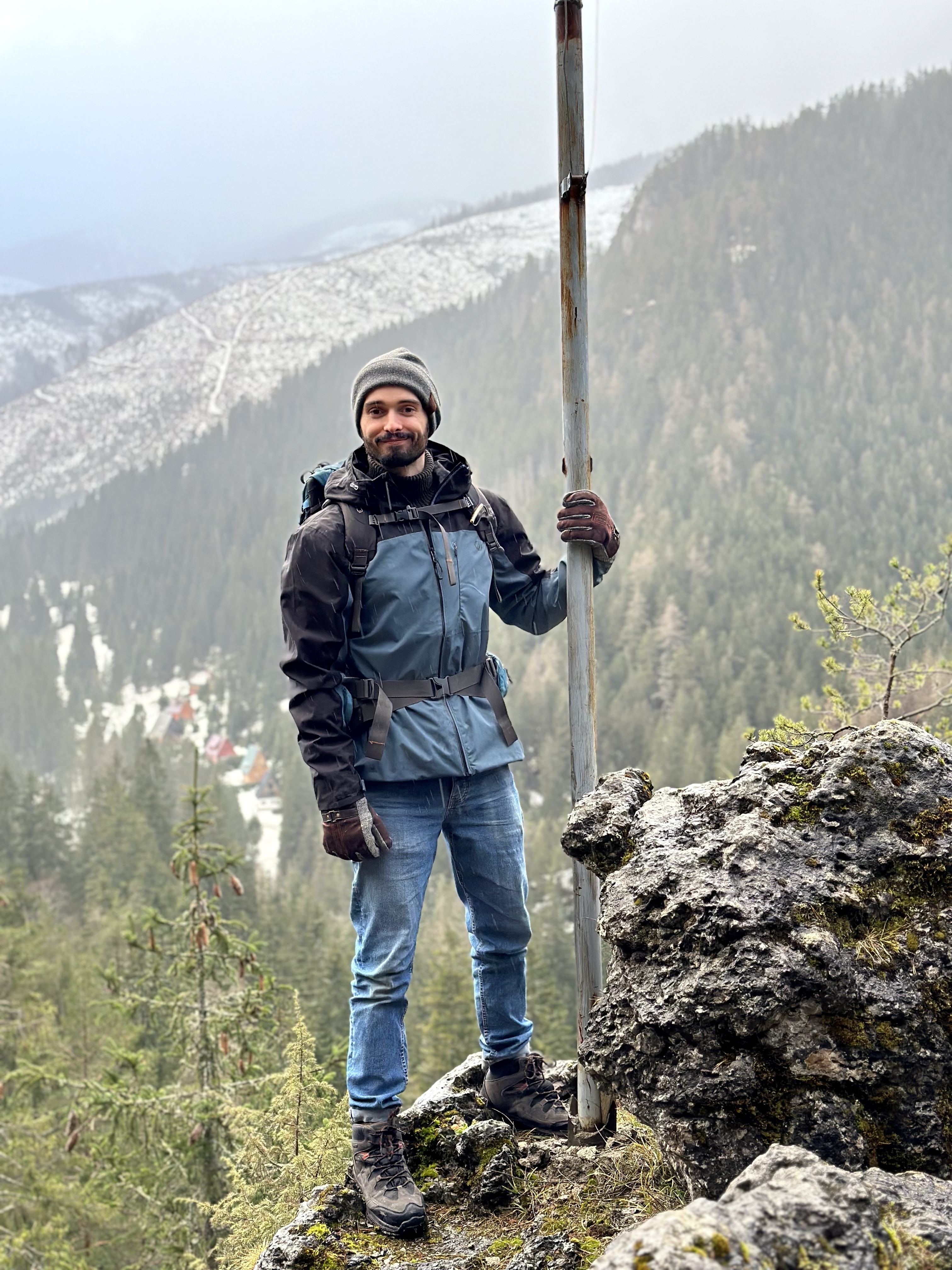
Has MS changed David's ambitions? If anything, it has made him more ambitious. 75-90% of untreated people with relapsing-remitting MS eventually develop secondary progressive MS, within 30 years. Modern medicine and treatment is rapidly decreasing this number, but with symptoms first showing at age 22, David is aware that working life could be harder in the future.
“It certainly hasn't made me feel like things are less possible for me. If anything, it's made me think I want to progress and do even more right now, so I can set myself up for that more successful future me. Should a time come where I need to take it easier, hopefully I can. I don't think that time is now.”
If he were job hunting today, one thing would decide it, and it is not a benefits package. “If I was asked to be in an office three, four, five days a week and there was no flexibility on that, then that's not the workplace for me. Because ultimately my health comes first, and that's not just physical health., it's my mental health, my emotional health, and the support I can show my loved ones.”
“Try Not to Be Worried About It”
For anyone weighing up whether to say something at work, his closing words are simpler. “It can feel really nice to talk about this stuff! You’ll more often find that you’re not alone, and that can be comforting. And it can be beneficial to you and others. Try not to be worried about it causing issues for you in the office. Most people are there to be supportive, if not everyone.”
“For anyone thinking of applying to a job at Sage, I would want them to know that they shouldn’t feel there’s anything stopping them. Sage is a place where you’re encouraged to be who you are – and that’s your whole self.”
David Smith is a Digital Delivery Manager at Sage and a co-lead of the UKI Ability Network. To find out more about opportunities at Sage, visit their profile on VERCIDA.

VERCIDA works with over one hundred clients who are committed to creating an inclusive work environment. If you are an employer and interested in working with VERCIDA to promote your culture and inclusion initiatives and attract the best candidates, please email [email protected] for more information.
 Help us find the best workplace for you by sharing more about yourself.
We will never disclose your information with others.
Help us find the best workplace for you by sharing more about yourself.
We will never disclose your information with others.
Learn more about this employer
Sage
Inclusive features
- No matching inclusive features