

You Don't Have to Leave Yourself at the Door: Inside Thales' REACH Network
Category: Race, Ethnicity & Heritage

In the high-stakes world of aerospace, defence, and digital identity, Thales is a name synonymous with precision and innovation. But behind the sophisticated systems and global infrastructure lies something more human: a growing commitment to ensuring that the people who build those systems feel genuinely valued.
At the heart of this cultural evolution is REACH (Race, Ethnicity, and Cultural Heritage), a staff-led network dedicated to ensuring that every individual, regardless of their background, has a clear path to success. REACH isn't just about ticking boxes; it’s a vibrant community that bridges the gap between corporate policy and the lived reality of Thales’ diverse workforce.
For many, the workplace can still feel like a space where you leave part of your identity at the door. REACH challenges that status quo by fostering an environment where cultural heritage is celebrated as a strategic strength rather than a footnote. From mentorship programmes that dismantle glass ceilings to courageous conversations that tackle systemic barriers, the network is a driving force for tangible equity. Today, we sit down with the Chair of REACH, Gertrude Chaville Parkin, to move beyond the brochure and explore the genuine, human impact of their work.
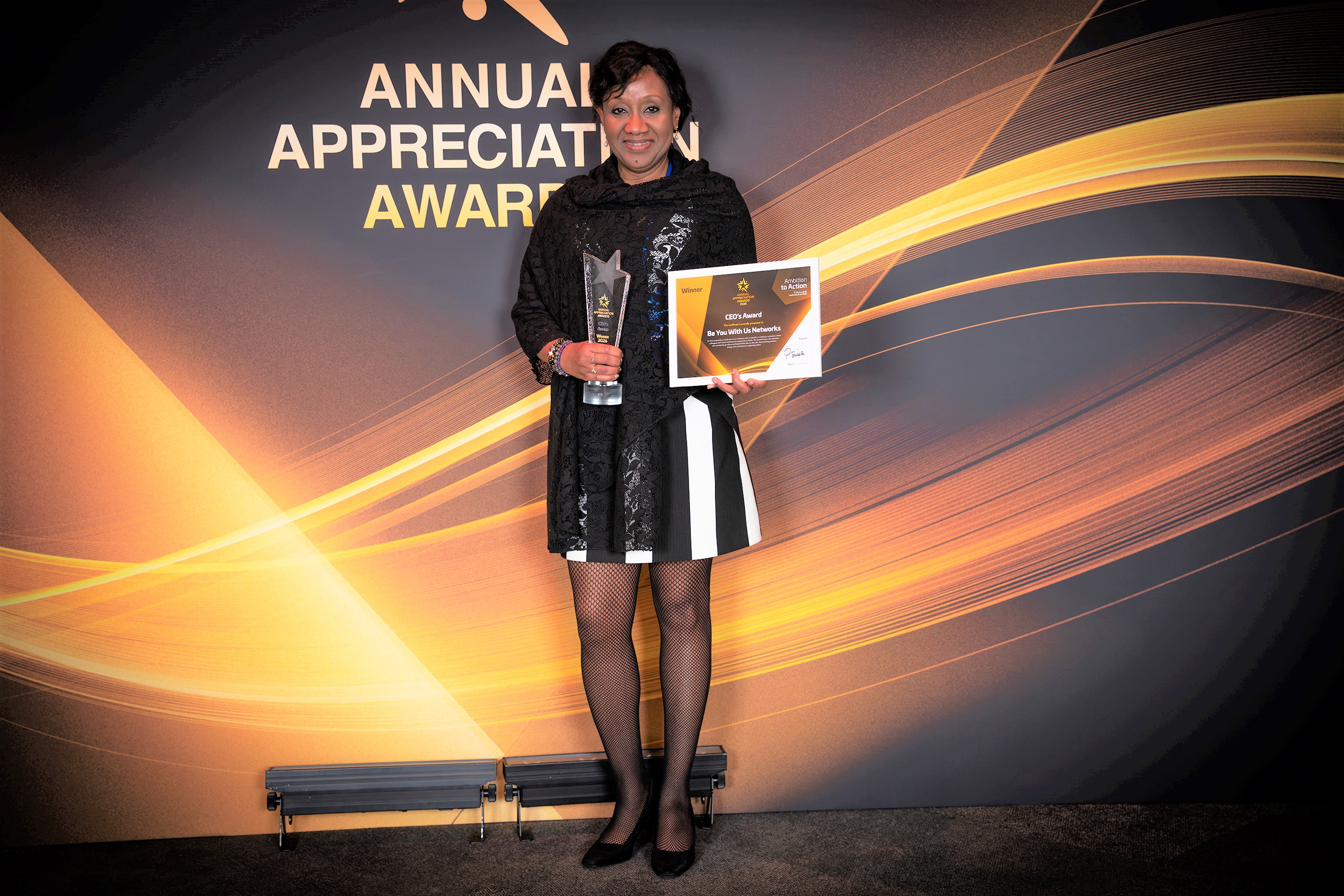 Gertrude receiving the CEO’s Appreciation Award on behalf of REACH
What was the personal catalyst that led you to take on the leadership of REACH?
I am passionate about engaging, empowering, and motivating others to realise their potential and achieve their goals. When the opportunity arose to lead REACH, I saw it as a chance to make a strategic contribution toward shaping our organisational culture and driving structural change to promote diversity at the leadership level. My aim is to support growth and inclusion for everyone. I am honoured and grateful that those who elected me share and believe in this vision.
Thales is a vast, engineering-led organisation. How does REACH translate high-level DEI goals into the everyday "shop floor" experience for an employee who might feel isolated in their role?
Our organisation is a technology company operating within the defence sector. A significant proportion of our employees possess expertise in Science, Technology, Engineering, and Mathematics (STEM). Our network actively highlights and celebrates the diverse racial and ethnic talent within our STEM workforce. This initiative was a central feature of the 2025 Black History Month (BHM) activities, providing graduates and employees an opportunity to showcase their skills and connect with one another.
We often talk about "safe spaces," but REACH creates "brave spaces." Can you share an example of a time when the network provided crucial support to a colleague navigating a difficult career hurdle?
Taking the step to ask for help can be challenging for members of our network. Recently, a few community members approached me—as a people leader and chair of REACH—for guidance with their development plans and objectives, especially when their line managers were less forthcoming about their growth opportunities. In 2026, we will create opportunities for REACH representatives to participate in people forums led by our business leaders, ensuring that we stay closely connected to the experiences and needs of our community.
Cultural celebrations are important, but systemic change is harder. What is one specific policy or process at Thales that REACH has successfully influenced to make the company more equitable?
Belonging, empowerment, talent development, and advancement are all important; however, I believe our greatest impact is in driving organisational change. Among various initiatives, our company signed the Race at Work Charter in 2023 (Business in the Community), publicly committing to uphold its principles. REACH plays a central role in ensuring Thales remains accountable for meeting the 7 principles of the Charter.
Race and ethnicity don't exist in a vacuum. How does REACH collaborate with other Thales networks (like those for LGBTQ+ or Neurodiversity) to ensure no one is left behind in the conversation?
All leads of ERG’s meet once every quarter to share ideas, agree priorities, and take action to improve the experience of the employees they represent. Intersectionality is a key theme for us in 2026 that will see us all working together.
While the "feeling" of inclusion is vital, what do the numbers say? Are there specific statistics or benchmarks, such as internal promotion rates or retention, that REACH is currently focused on improving?
Obtaining data and benchmarking is another key focus for us in 2026. We are not there yet.
You represent Thales both internally and externally. If you were to speak to prospective talent from ethnic minority backgrounds, what is the most honest piece of advice you could give them about thriving in this industry?
Thales is a people-oriented company where we promote inclusivity and speaking up with the assurance of no retaliation.
If we were to sit down again in three years, what is the one "big win" you hope REACH will have achieved for the Thales community?
REACH would have become a strategic partner to Thales in achieving its People Corporate Social Responsibility ambition and in embedding its inclusive and equitable ambition.
For an employee who is hesitant to join a staff network because they fear it’s "just more work," what would you say to convince them of the ROI on their time and energy?
Joining an ERG means becoming part of a movement that shapes organisational culture while providing opportunities to enhance your leadership skills, support your career growth, and increase your visibility.
Describe the REACH community in just three words.
Passionate. Determined. Enthusiastic.
What is the last book you read (or podcast you heard) that shifted your perspective on inclusion?
I am a professional coach in training and inclusion is a key aspect of coaching. My training has been a revelation on making space for others to reflect and to feel safe.
What’s your "go-to" comfort food that reminds you of your heritage?
Un court bouillon de poisons. 😊 I am Creole, French Caribbean – fish and seafood all the way!
If you could have a 30-minute mentorship session with any historical figure, who would it be?
Francois-Dominique Toussaint Louverture, born a slave in 1743 and becoming a Governor General of Saint-Domingue (Haiti) in 1801.
Gertrude's story is one of many unfolding across Thales right now — people who are choosing to invest their energy not just in their own advancement, but in changing the culture for the people who come after them.
If that sounds like a place you want to grow, Thales is hiring. Explore open roles and find out more about REACH and Thales' wider inclusion networks below.

VERCIDA works with over one hundred clients who are committed to creating an inclusive work environment. If you are an employer and interested in working with VERCIDA to promote your culture and inclusion initiatives and attract the best candidates, please email [email protected] for more information.
 Help us find the best workplace for you by sharing more about yourself.
We will never disclose your information with others.
Help us find the best workplace for you by sharing more about yourself.
We will never disclose your information with others.
Learn more about this employer
Thales
Inclusive features
- No matching inclusive features