

Natalie's Inspiring Software Engineering Career Switch at Thales
Category: Gender (Equality & Identity), Training & Development

Transitioning careers can be a daunting yet incredibly rewarding journey, and Natalie Martin's story is a testament to this. From an English graduate who initially "fell into" a marketing career, Natalie made a significant leap into the world of software engineering. Her path was not just about acquiring new technical skills, but also about embracing challenges, overcoming imposter syndrome, and discovering a profound passion for problem-solving and building.
This article delves into Natalie's inspiring career switch, exploring the pivotal moments that led to her decision, the challenges she conquered, and the fulfilling impact her new career has had on both her professional and personal life.
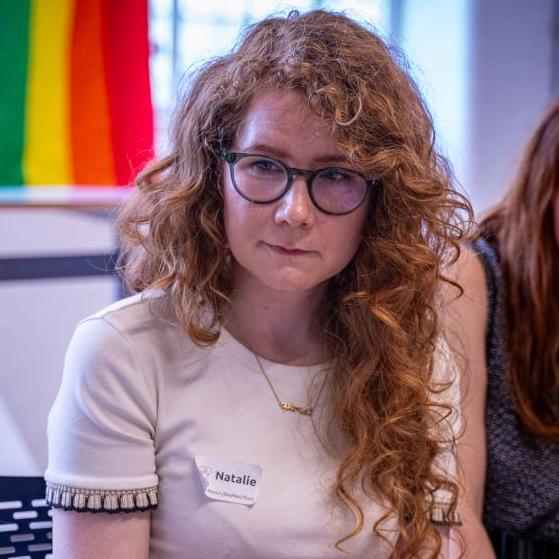 Natalie Martin, Software Engineer
What prompted your decision to switch careers, and what were the main factors that influenced your choice?
I fell into my previous career in marketing after studying English at university, and through working in small businesses and taking an interest in technology, I began working closely with dev teams. After asking many questions, one of the engineers suggested I take an online course, and after a few courses (and a few tasks I managed to beg the development team for), I began to think, “if I enjoy this so much, why don’t I make this my career?”. I also attended a conference where I heard from other career switchers in tech, and that made me think it could be a real possibility. I’m glad I met the right people at the right time, as at school, IT was mainly learning how to use Microsoft Office!
How did you select our program or company as the right fit for your career transition?
The Code First Girls program allowed me to study towards switching careers in the evenings, so I could continue working full-time, which was essential for me as I had financial responsibilities. After doing some research, I was excited about Thales’ culture (especially the inclusivity initiatives and networking opportunities for women) and curious about some of the projects I had seen in the news (I remember reading up on a Quantum computing project ahead of my interview!).
The interview process was also probably the best I’ve experienced – we were given the questions up front so we could prepare rather than being caught off-guard and the interviews focused on skills and behaviours, which was ideal as a career switcher.
What challenges did you face during the transition, and how did you overcome them?
A lot of imposter syndrome and feeling like I need to “prove myself”! It was difficult transitioning from a career where I was considered knowledgeable in my field to feeling like I was starting from scratch amongst people who are much more qualified and experienced than me. But I’d worked hard for a long time to get here, and I think my drive has got me some of the way while I pick up that experience. It’s also encouraging to know that even the most experienced engineers encounter bugs and have Stack Overflow up in the background!
I keep a “brag doc” of learnings and achievements, which I periodically reflect on to give myself credit for how far I’ve come. I’m lucky to have joined the organisation with other people from my program, and it’s been invaluable to have that support network that understands what I’ve gone through.
Can you describe any specific skills or knowledge from your previous career that have been beneficial in your new role?
Curiosity is what got me here in the first place! If I hadn’t questioned the dev team, I wouldn’t have plucked up the confidence to start learning software engineering, and I continue to ask a lot of questions to build my understanding. In marketing, I also enjoyed trying to work out why a campaign performed a certain way – and I continue to enjoy that problem-solving aspect in my current role when I’m squashing bugs! I’m also grateful that I developed great communication skills, which I’ve been able to utilise in my new role when managing stakeholders, working with my team and developing documentation.
How has this career switch impacted your professional life and personal fulfilment?
I feel passionate about software engineering and encouraging more diversity in the profession, which has led to some great opportunities to speak on panels (something I never thought I’d be doing!). I love that I now spend my days solving problems and building something that didn’t exist previously. The whole experience of switching careers has also tested my resilience and helped me realise what I’m capable of. I’m more likely to say yes to opportunities that feel outside of my comfort zone, which has been a useful attitude when constantly learning new things on the job. I’ve also got a better work-life balance now, which has allowed me to pursue other interests and has been valuable in allowing me to train for my other passion – archery!
What has been the most rewarding aspect of your new career so far?
I was tasked with building a GUI app last year and was daunted by the prospect at first, as I hadn’t used this programming language or framework before. It was a great feeling when I got to the end of that project and could look back and have tangible evidence of how far I’d progressed in those 6 months.
How did the training and support provided during your transition help you adjust to your new field?
My team were very patient with the amount of time they gave me to settle in. Although the general principles were the same, the programming languages I’d learnt during the Code First Girls course were different to those I would be using in my new role, so my manager set me up with a Pluralsight license and gave me time to learn C++. I have also been working closely with another engineer on my project, and we’ve been given time for them to support me with on-the-job training.
My discipline has also been very supportive in supporting my ambitions to formalise my knowledge further with a Level 7 apprenticeship. This has been invaluable in helping me tackle my imposter syndrome by expanding on the topics covered in the Code First Girls course and filling out some of the gaps in my knowledge with formalised learning.
What would you say to others contemplating a similar career switch?
Do it! Switching careers is probably the most challenging thing I’ve ever done but it also the most rewarding. It’s natural to be nervous at the prospect of making a change but remember your end goal and surround yourself with a great support network and others who have switched careers.
Also, don’t be afraid to ask questions. You will have a unique point of view that your team will value, and by asking questions, you’ll not only be demonstrating your curiosity but also identify opportunities to improve processes or find better ways of doing things for the rest of your team.
Finally, be kind to yourself. Constantly absorbing new information is tough, however, it’s tougher if you’re burnt out! Make sure you set aside time for your other interests and some self-care.
Did you encounter any unexpected surprises during your transition? If so, what were they?
In my previous career, I largely worked independently – I worked predominantly for start-ups or SMEs, so it was often me driving all the marketing activity. It’s taken a bit of adjustment for me to realise it’s okay and encouraged to lean on my team members and ask for help when I need it.
It’s also quite fun seeing the look of surprise on people’s faces when I tell them I’m an English graduate working in Software Engineering 😊
How do you envision your future in your new career, and what goals do you hope to achieve?
I’m still learning about the different career paths available to me, so I haven’t got a specific job title or role in mind yet. I’m an ambassador for Code First Girls, so I’d like to leverage my experience and volunteering hours to help other women and girls excel in STEM careers.
One of the reasons I pursued software engineering was that I really enjoy learning, and engineering seems to offer plenty of opportunities to do so. I would like to continue to ensure that it remains a core part of my role. For now, I’m just focusing on continuing to build my knowledge and asking the questions so I can continue to increase my contributions to my project.

VERCIDA works with over one hundred clients who are committed to creating an inclusive work environment. If you are an employer and interested in working with VERCIDA to promote your culture and inclusion initiatives and attract the best candidates, please email [email protected] for more information.
 Help us find the best workplace for you by sharing more about yourself.
We will never disclose your information with others.
Help us find the best workplace for you by sharing more about yourself.
We will never disclose your information with others.
Learn more about this employer
Thales
Inclusive features
- No matching inclusive features