

Defence is For Everyone: Lizzie Findley on Finding Her Place, and Herself, at Thales
Category: Gender (Equality & Identity), LGBTQIA+ (Sexual Orientation)

Lizzie Findley fell into engineering almost by accident. Now a supportability engineer at Thales, an LGBT+ network committee member and a STEM outreach volunteer, she tells VERCIDA about visibility, belonging and why bringing your whole self to work is the whole point.
Written by VERCIDA for Thales
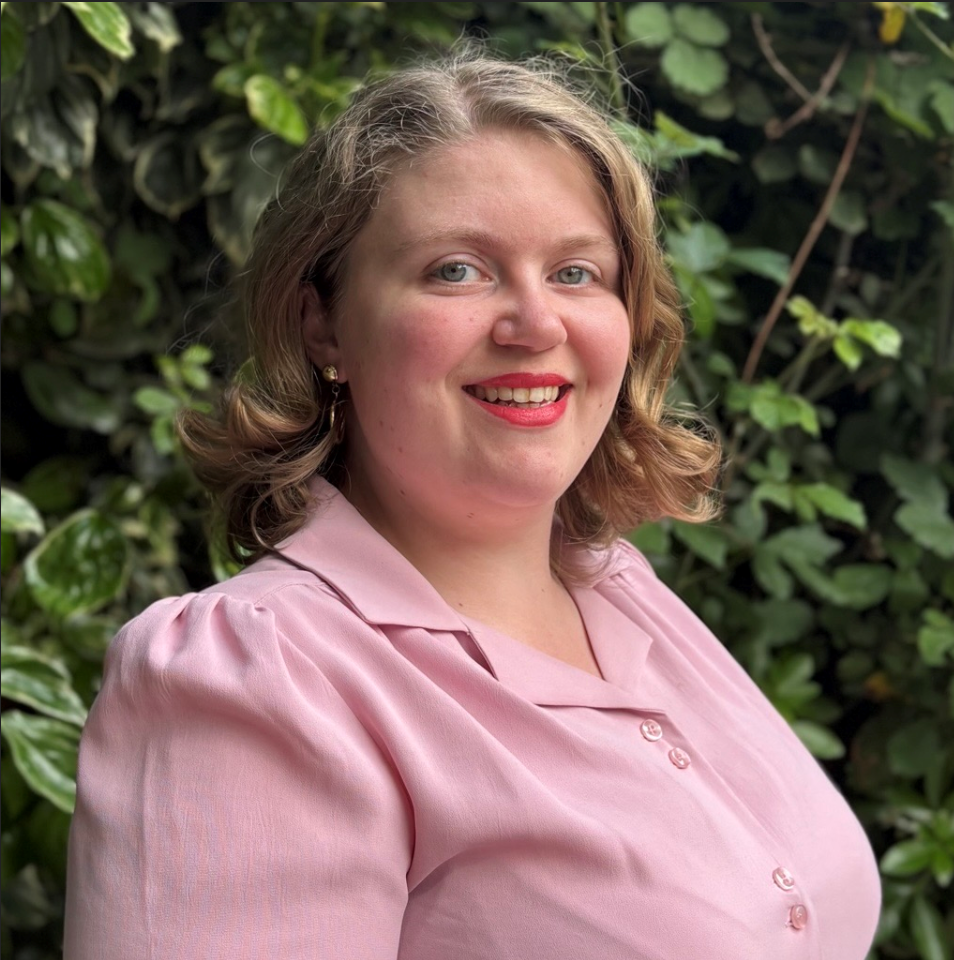
Ask Lizzie Findley how she got into ILS engineering and she will tell you, cheerfully, that she went along for the interview practice. She was a recent aerospace graduate looking for a graduate scheme near home, a small local consultancy was hiring, and she turned up mostly to sharpen her technique. She was asked what she knew about a discipline called ILS and answered plainly: ‘nothing.’ Then they started talking, and something clicked.
‘I’ve always loved data and numbers and engineering and understanding how things work,’ she says. ‘This seemed like the perfect intersection of keeping things going, understanding how they work, and how to make them better.’
A few years later she joined Thales, where she is now a ILS supportability engineer. Hers is a good example of a career nobody maps out in full, and it is none the worse for it. It is also a story with more than one thread running through it: being a woman in engineering, being openly bisexual, and a belief in visibility that shapes almost everything she does beyond the day job.
The job most people don’t realise is there
So what does a supportability engineer actually do? Supportability, or ILS, is logistical support engineering, and it is the kind of role most people never think about until it is spelled out for them. Building something and handing it over is only the start. Lizzie’s world is everything that comes after: keeping a product repairable and supportable across its entire life. Ideally these would be woven into how a product is built but that isn’t always the case nowadays. She reaches for the contrast between a phone, which you simply replace when it breaks, and something like a train or a vehicle, where keeping it running for years is the whole point.
Much of her work centres on DRACAS, the Data Reporting, Analysis and Corrective Action System, which she describes as a ‘closed loop’: record everything that has gone wrong, investigate it, and make sure it can be put right in future. For anyone who assumes engineering is only about building the shiny new thing, it is a reminder of how much skilled work goes into keeping things working long after launch.
The little hitch
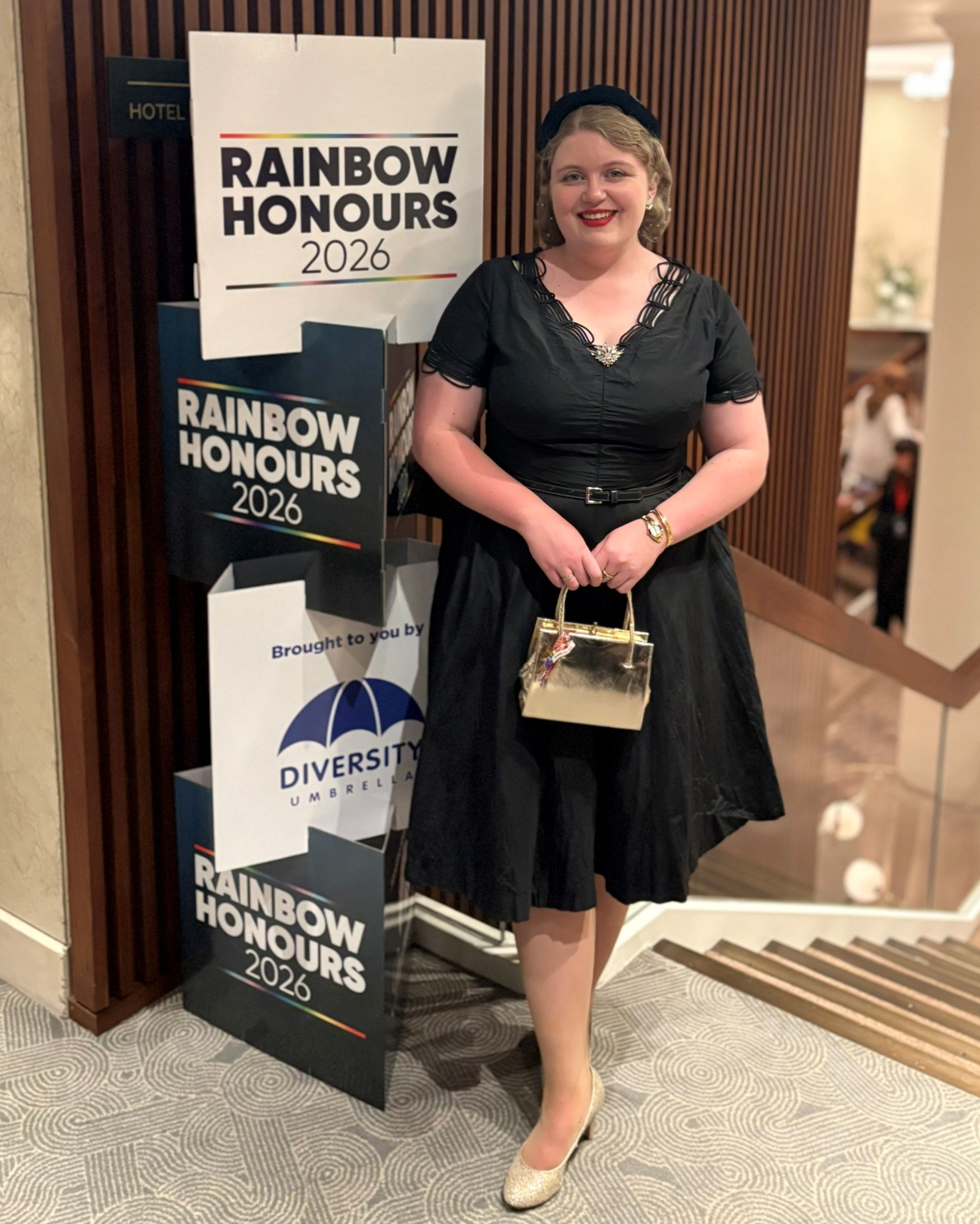
Lizzie is, by her own description, ‘very femme presenting,’ and she has learned to recognise a small, familiar reaction when she walks into a room of male engineers, a half-second ‘little hitch’ before people place her, and the occasional assumption that she must be there to take the notes. Almost everyone gets past it within seconds, she says, and the skill is really in how you carry on from that moment.
That composure has roots. She gives credit to her attendance at an all-girls school that ran on a ‘this girl can’ assumption, where the default answer to a girl’s ambition was yes rather than no, and that mindset travelled with her into university and into work.
“The default option was yes. There was never a default option of no.”
She is bisexual, and out at work without making a thing of it. She does not, as she puts it, ‘opens every meeting saying, hi, I’m bisexual’; it comes up naturally among colleagues. Now and then there is a ‘tilt shift,’ a beat while someone recalibrates an assumption, but it has never been a stumbling block, or something she has felt ‘held against’ her professionally.
Her way with the odd raised eyebrow is low-drama: meet the moment with curiosity, and give people no chance, as she puts it, to ‘come up with their own negative narrative.’ Do that, and mostly they don’t.
Networks that do more than meet
Lizzie sits on the committee of Thales’s LGBT+ network, one of six employee networks grouped under the banner Be You; With Us. Visibility is much of the point. The rainbow lanyards, worn by allies as much as members and by the CEO and COO on calls, are a small thing that does real work, reducing what she calls the ‘sense of othering’ and marking you not as separate but as part of the team who happens to be wearing one.
The networks run in the other direction too, carrying members’ concerns up to leadership in confidence, a ‘voice in both directions’ for issues people might not feel able to raise on their own.
The moments that stay with her are the human ones. Carefully, and without names, she describes a nervous new starter at one of the network’s coffee mornings, someone who had come from a workplace where being themself was, in his words, ‘never going to be accepted.’ Over a few months, with the network alongside they, they decided to wear a lanyard and, eventually, told their team about they partner. Watching that was bittersweet, Lizzie admits, but proof of how far the network’s quiet support can carry someone.
She is active, too, in Women in Thales, which runs routes into leadership and professional development, and in the Neurodiversity network, which recently turned personal. Lizzie went through a workplace diagnosis of AuDHD and found the group both welcoming and practical, helping her secure the adjustments she needed without the years-long wait of an NHS route.
“I want everyone to bring their best self to work. The best way to do that is for them to be themselves.”
Why pour so much energy into all this on top of a demanding role? For Lizzie the logic is simple. People do their best work when they can be themselves, and hiding any part of who you are carries a cost, to wellbeing and to the work itself. Those who bring their full selves in, she argues, tend to be the most creative and the most committed, and given how much of life is spent at work, it ought to be somewhere you can thrive.
Inclusion you don’t have to ask for
Thales, in Lizzie’s telling, is ‘a very curious company’ that takes people’s growth seriously, unafraid to tell someone they might be better suited to a different role and then back them to make the move. She has watched people go from admin to project control and everything in between, and the point, she says, is fostering a whole career rather than fixing someone in a single job.
Inclusion, in her experience, behaves less like an initiative than a habit. The Pride flag goes up in June, the trans flag on Trans Day of Remembrance and Trans Day of Visibility, and where another employer might make a fanfare of it, here it is simply what happens.
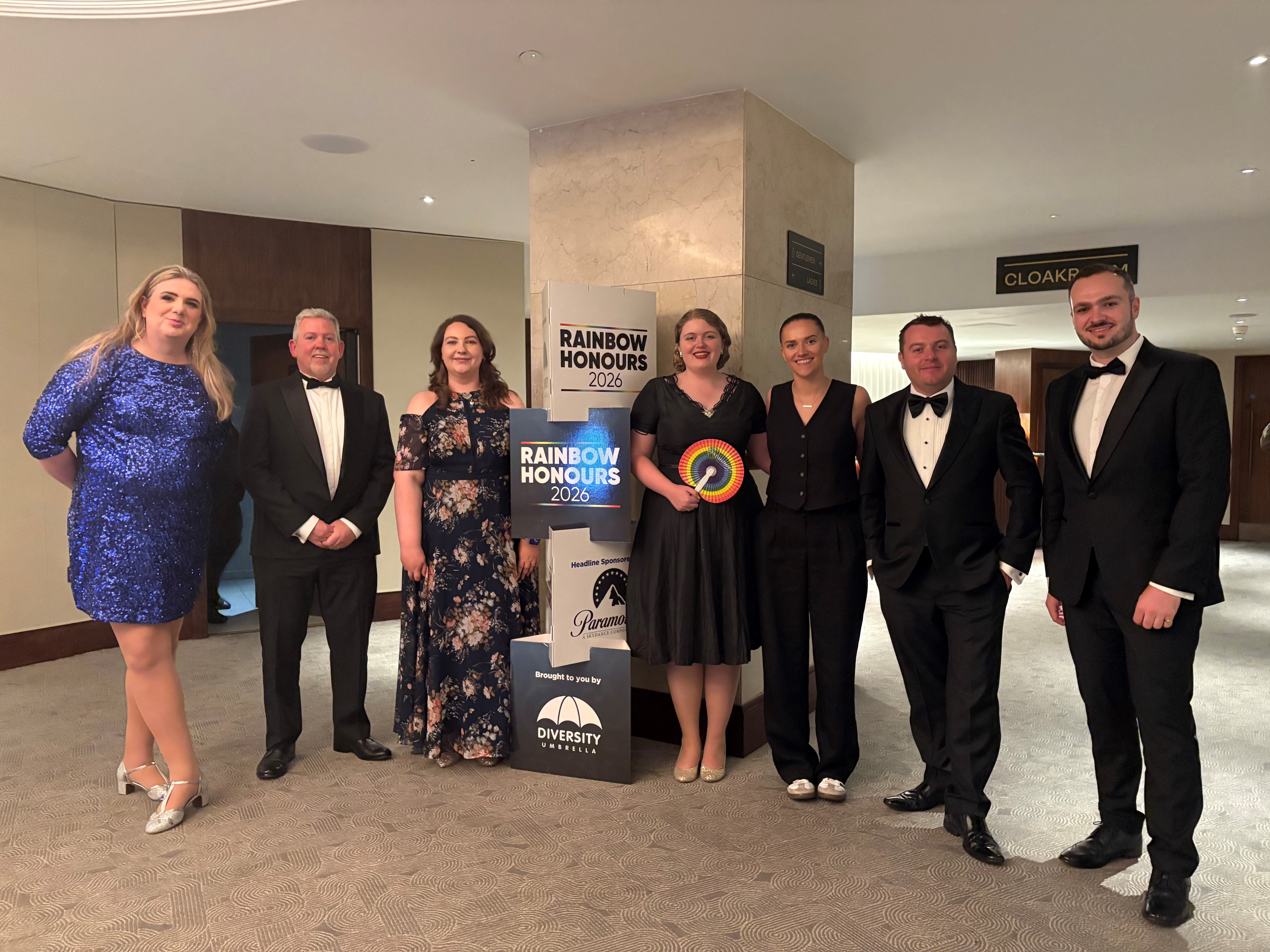
That quiet, steady work is recognised at the top of the company, too. At a Thales conference earlier this year, the LGBT+ network Lizzie sits on was given the company’s Together award for its advocacy, and all six of the Be You, With Us networks, Women in Thales, Armed Forces, Neurodivergent, Accessibility, REACH and LGBT+, were jointly honoured with the CEO’s Award. What that recognition means to her is straightforward: it shows a commitment that is, in her words, ‘not just being on paper.’
The same impression lands when she looks outward. At an industry awards evening she listened to a rival firm reel off its diversity credentials, nudged the colleague beside her to ask whether Thales did the same, and got the easy reply that it already did.
None of that, she is quick to add, means the work is done. A diversity and inclusion roadmap never really ends; you can be as progressive as you think and still look up to find the world has moved on. What matters, in her view, is that Thales keeps walking it rather than looking away.
‘That’s exactly what we want’
Lizzie knows defence engineering is not where a lot of people picture themselves, especially if all they have seen is one headline product. Her answer is to look wider. A company this size, she points out, is far more than its headline points, with a broad portfolio and a great deal of work she is proud of. And whatever pulls you in, you will not be boxed in, because if something interests you, they will find a way to make it happen.
“A diverse group of people are required to solve diverse problems.”
To any woman, or any queer person, wondering whether they belong in the industry, her pitch is really an argument about ideas. Recruit the same handful of people and you get the same handful of thoughts, which is no way to innovate. Then comes the line that could sit on a poster. ‘If you think you’re a little bit out there,’ she says, ‘that’s exactly what we want. You’re the kind of person we need.’
Would she do it all again?
She answers without a pause: she has no regrets because it brought her here and to people she would never otherwise have met. Her guiding line, borrowed from Ted Lasso and, she suspects, borrowed by him too, is to “be curious, not judgmental”. It is the same thing she tells managers in the networks’ allyship sessions: ask people what they actually need and how to help them be their best.
Curiosity, she says, means you ‘learn something new every time.’ Which, for Lizzie, is simply the best way to be.
Curious about a career where you can bring your whole self to work? Explore Thales’s latest opportunities on VERCIDA.

VERCIDA works with over one hundred clients who are committed to creating an inclusive work environment. If you are an employer and interested in working with VERCIDA to promote your culture and inclusion initiatives and attract the best candidates, please email [email protected] for more information.
 Help us find the best workplace for you by sharing more about yourself.
We will never disclose your information with others.
Help us find the best workplace for you by sharing more about yourself.
We will never disclose your information with others.
Learn more about this employer
Thales
Inclusive features
- No matching inclusive features